
Trump has played throughout his career as a deal-maker who could deliver where others could not, and Ukraine represents the ultimate test of that image, notes Manish Dabhade.
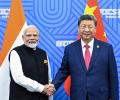
The Galwan clash occurred six months after the Doklam disengagement and two high-profile meetings. India should not be caught by surprise once again, asserts former foreign secretary Shyam Saran.
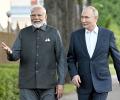
Ahead of Modi-Putin talks, the US called upon India to make it clear to Russia that any resolution of the Ukraine conflict must respect the United Nations charter and Ukraine's territorial integrity and sovereignty.

The biggest question looming over the summit is whether there will be a joint leaders' declaration in view of the sharp differences between the West and the Russia-China combine on the text to describe the Ukraine conflict in the document.

The CBI has significantly increased the rate of fugitive repatriation, bringing back 134 individuals in the last five years, doubling the number from the previous decade. This success is attributed to enhanced diplomatic efforts, technological advancements, and improved coordination with Interpol.
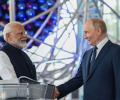
Putin expressed concern over the situation in Gaza, and said Palestinian President Mahmoud Abbas has been invited to BRICS events.

Keen to capitalise on the growing geopolitical support from African nations after the recently concluded G20 Summit, India is working with the African Union to hold the fourth India-Africa Forum Summit later this year in Kenya's Nairobi, sources said. Prime Minister Narendra Modi is expected to attend the mega meet along with as many as 50 African leaders, they added. First held in New Delhi in 2008, the India-Africa Forum Summit marked India's initial diplomatic efforts to seek a comprehensive partnership with the African bloc of nations as a whole, at a time when China had begun its own outreach.

The summit is being attended by more than 30 heads of state and top officials from the European Union and invited guest countries and 14 heads of international organisations.
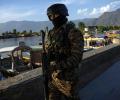
The 'mediation' by the United States from behind the scene on the diplomatic track appears to be once again working, which calls on both Delhi and Islamabad to show restraint and pull back from a military confrontation, notes Ambassador M K Bhadrakumar.
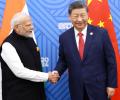
Chinese President Xi Jinping on Wednesday pledged to strengthen the strategic relationships with neighbouring countries by 'appropriately' managing differences and enhancing supply chain ties as China's tariff war with the United States escalated.
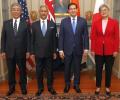
The Quad grouping has called for bringing the perpetrators, organisers and financiers of the Pahalgam terror attack to justice without any delay and urged UN member nations to extend cooperation for it.

Just as Gandhiji's spinning wheel became a symbol of resistance, Indian travellers today can turn their passports into instruments of peaceful protest, argues Harsh Roongta.
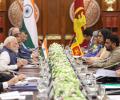
Prime Minister Narendra Modi received a tri-services ceremonial welcome in Colombo, Sri Lanka, marking the first time such an honor has been bestowed upon a foreign leader. The welcome took place at the historic Independence Square, the venue for national day celebrations. Modi's visit comes as Sri Lanka shows signs of recovery from a recent economic crisis, with India playing a significant role in providing assistance. During the visit, both leaders are expected to discuss a range of issues, including defense cooperation, energy, and digital initiatives.
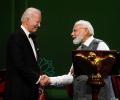
United States President Joe Biden will travel to India from September 7 to 10 to attend the G-20 Leaders' Summit during which he will discuss with other leaders a range of global challenges, including the Ukraine conflict, the White House announced on Tuesday.
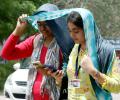
About 57 per cent of Indian districts, home to 76 per cent of the country's population, are currently at high to very high risk from extreme heat.

India's dream to be in the forefront of international politics has come true. India has placed itself firmly as a major player in the shaping of a new world order, observes Ambassador T P Sreenivasan.

Biden told reporters at a joint news conference with the visiting Australian Prime Minister Anthony Albanese that his analysis is based on his instinct and does not have any proof for this.

After a 27-year long alliance, the World Economic Forum (WEF) and the Confederation of Indian Industry (CII) have parted ways on organising the India Economic Summit, fuelling many theories on the reason. Both the organisations, however, sought to play down the development, saying it was a natural evolution for the Davos-based WEF to organise its event in India as it does in other regions.
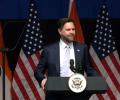
US Vice President JD Vance called on India to drop non-tariff barriers, give greater access to its markets and buy more American energy products and military hardware. Vance, in a speech in Jaipur, highlighted the need for a stronger US-India partnership for a prosperous and peaceful 21st century. He emphasized the importance of working together to address global challenges and praised Prime Minister Narendra Modi, describing him as a "special person." Vance also urged India to provide greater market access to American products and buy more defense platforms and energy from the US. He suggested that India consider dropping some of the non-tariff barriers for American access to the Indian market and highlighted the benefits of closer India-US defense collaboration, advocating for New Delhi to procure more military hardware from the US. He cited the example of American fifth-generation F-35s, arguing they would give the Indian Air Force the ability to defend its airspace and protect its people like never before. Vance also welcomed the Modi government's budget announcement to amend India's civil nuclear liability laws, paving the way for US producers to export small modular reactors and build larger US-designed reactors in India. He emphasized the importance of energy security for India's AI ambitions, stating "there is no AI future without energy security and energy dominance." Vance's visit comes amid growing global concerns over the US's tariff war.

'A less tense US-China relationship would make Beijing less likely to provoke India -- including on the border -- in retaliation for its close defence ties with the US.'
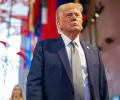
"India and everybody would think of them as an ally. I can say the same for others. But this is a group of wonderful nations that is countering other countries that look to hurt us on trade," he added.
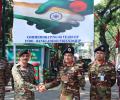
India has lodged a strong protest with Bangladesh over a now-deleted social media post by a key aide of Bangladesh's interim government that claimed certain areas of Indian territory should be part of that country. The post, which included a map showing parts of West Bengal, Tripura, and Assam as belonging to Bangladesh, was made by Mahfuz Alam, a de facto minister in the Muhammad Yunus-led interim government. The post sparked backlash and was subsequently deleted. India's External Affairs Ministry spokesperson Randhir Jaiswal reminded all concerned to be "mindful" of their public comments and emphasized the need for responsibility in public articulation.
The 17 rare earth elements that are at the centre of the current crisis are critical components of everyday products -- from cars to jet engines to electronics like smartphones and flat-screen TVs.
'In the Indian government there are no illusions about the United States reliability or the possibility of having any kind of preferential treatment from Washington when it comes to trade.'
"China is an absolutely impossible factor to ignore in what has been our confrontation with Pakistan," Tharoor said.
'The chief minister believes the poorest of the poor have the first right on government resources.'

'India is a rising power and it'll become one day a great power. I think the diplomatic skills, the execution of a flawless G-20 sends the message that India has arrived on the scene and it is becoming a great power'

Without mentioning the boundary dispute, the spokesperson said that China-India relations have been stable on the whole and "our two sides have maintained dialogue and communication at various levels".
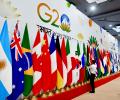
The silver lining for India's presidency is likely to be the support by almost all G20 countries to its proposal to include the African Union as a permanent member of the bloc that has emerged as perhaps the most influential multilateral forum after the United Nations.
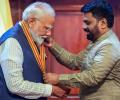
Sri Lanka has bestowed its highest civilian award, the Mithra Vibhushana, on Prime Minister Narendra Modi in recognition of his role in strengthening ties between the two nations. The award was presented by President Anura Kumara Dissanayake at a ceremony in Colombo. PM Modi expressed gratitude, stating the award honors not just him but also the people of India. The Mithra Vibhushana, instituted in 2008, has previously been awarded to prominent figures such as former Maldivian president Maumoon Abdul Gayoom and the late Palestinian leader Yasser Arafat. India's Foreign Secretary Vikram Misri highlighted the award as a recognition of PM Modi's contribution to strengthening the India-Sri Lanka partnership, particularly during Sri Lanka's economic crisis. The award includes a citation and a silver medal adorned with Sri Lankan gems and symbolic motifs representing shared heritage and prosperity.
.jpg)
Expressing concern over the investment and innovation environment in India, a top US trade official has said the recent set of economic reforms initiated by the country were not enough to return to the path of robust growth.
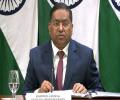
India on Friday said that the United States' administration's information regarding funding in India is 'deeply troubling' and has led to concerns regarding foreign interference in India's internal affairs.

Prime Minister Narendra Modi asserted on Tuesday that India's water will no longer flow outside the country but will be utilized in the nation's interest, a statement seemingly directed at Pakistan following his government's decision to put the Indus Waters Treaty in abeyance after the Pahalgam terror attack. Addressing the ABP Network's 'India@2047' Summit, Modi emphasized his government's focus on interlinking rivers, noting that water used to be a source of conflict among states, before alluding to India's stance against Pakistan while discussing water. He highlighted the finalization of the India-UK free trade agreement as a historic milestone and underscored the importance of prioritizing national interest for achieving objectives and realizing the country's potential. Modi highlighted the country's growth and development under his government's rule, emphasizing its focus on welfare schemes and digitalization. He reiterated his government's commitment to 'Nation First' and pointed to the recent reforms undertaken, including the new Waqf law and the ban on triple talaq, which he said were aimed at benefiting the marginalized sections of society.
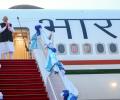
Prime Minister Narendra Modi is set to visit Sri Lanka, where he will hold talks with President Anura Kumara Dissanayake and strengthen ties through agreements on defence, energy security, and digitalisation. This visit aims to further bolster the already strong relationship between the two nations and is expected to include several outcomes, including a defence cooperation agreement, debt restructuring, and a currency swap. This visit comes at a time when Sri Lanka is recovering from an economic crisis, where India played a significant role in providing financial assistance.
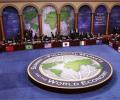
Chief Minister of Maharashtra Prithviraj Chavan said it is an opportunity for the state, which has been at the forefront of economic development in the country, to showcase itself as a favourable investment destination.
It includes a session with Gadkari on analysing the initiatives needed to bridge the $1 trillion infrastructure deficit in the country.
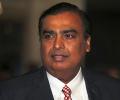
Mukesh Ambani, who is in talks with Saudi Arabian oil giant Aramco to sell one-fifth of his oil-to-chemicals business in India for $ 15 billion, said the two countries have all factors to drive growth - technology, young demography, and leadership.
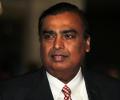
Oil-to-telecom conglomerate Reliance Industries Ltd will invest Rs 75,000 crore in North Eastern states in setting up 350 biogas plants, expanding its telecom services, retail footprint, and clean energy projects, chairman Mukesh Ambani said on Friday. Speaking at the Rising NorthEast Investors Summit here, Reliance Industries Ltd chairman and managing director said his group will invest in factories for high-quality FMCG products in the region and setting up a 150-bed cancer hospital in Manipur.

The TMC-led West Bengal government has already started laying the groundwork for the election, setting the tone with the recent Bengal Global Business Summit and the state Budget.
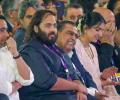
India's versatile media and entertainment industry can grow more than three-fold to $100 billion in the next decade, creating millions of jobs and a ripple effect across sectors, billionaire Mukesh Ambani said on Thursday.
 © 2026 Rediff.com - Advertise with us - Disclaimer - Privacy Policy - Sitemap - Feedback - About us - Terms of use - Grievances